Your roof is one of the most important investments you will ever make in your home. It shields your family from the relentless Texas sun, protects your belongings during hailstorms, and maintains the structural integrity of everything beneath it. Yet when it comes time to hire a roofer, many homeowners in North Texas find themselves unsure of where to start or worse, they rush into a decision that costs them dearly later.
Whether you are dealing with hail damage in Frisco, replacing an aging roof in Little Elm, or planning a new build in Southlake, asking the right questions before signing a contract can mean the difference between a job done right and a nightmare that drags on for months. At Lee Construction, we have been serving North Texas homeowners across Frisco, Little Elm, Southlake, McKinney, Fort Worth, and the greater DFW area for years, and we believe an informed homeowner is our best customer.
This guide walks you through every question worth asking and what to listen for in the answers. Read it once before you pick up the phone, and you will walk into every contractor conversation with confidence.
Why the Right Questions Matter More Than the Lowest Bid
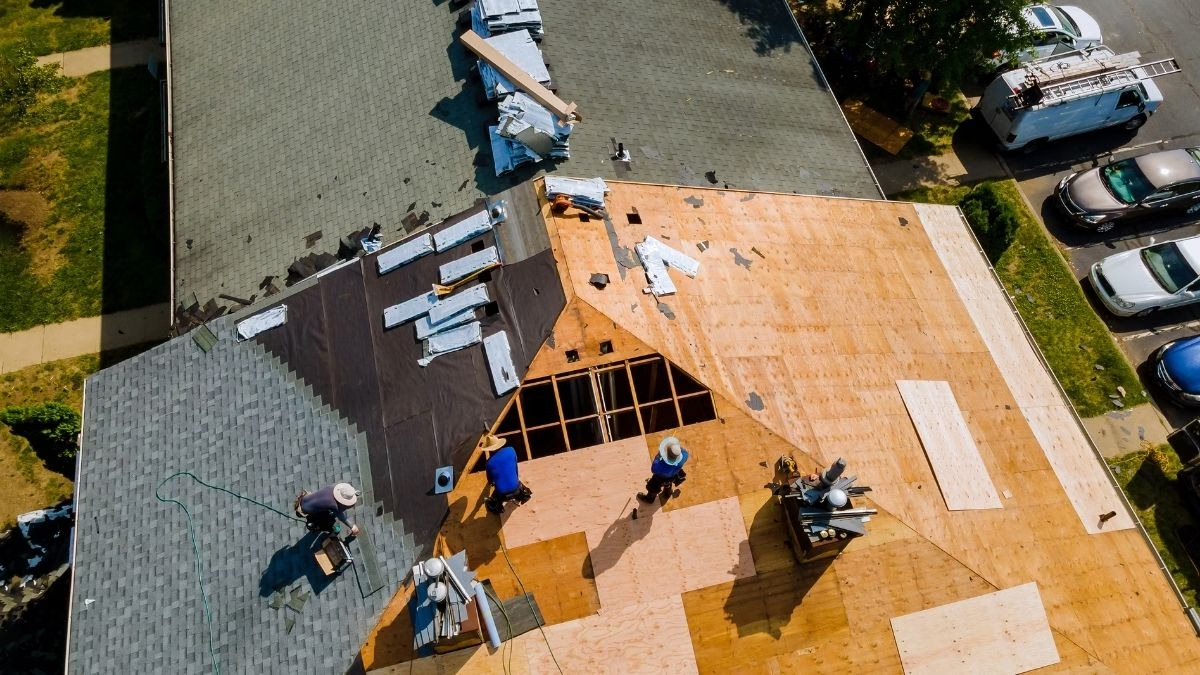
North Texas is no stranger to extreme weather. From spring hailstorms that can strip shingles in minutes to summer heat that warps poorly installed materials, roofs in this region work harder than almost anywhere else in the country. The demand for roofing work also means that after every major storm, out-of-town contractors flood communities like Frisco and McKinney, offering quick fixes at bargain prices only to disappear once payment clears.
The lowest quote is rarely the best deal. What matters far more is the contractor’s track record, their warranty, the materials they use, and whether they will still be around if something goes wrong six months from now. Asking the right questions upfront filters out the bad actors and reveals the professionals who will stand behind their work.
Question 1: Are You Licensed and Insured in Texas?
This is the very first thing to ask, and the answer should come without hesitation. Texas does not require a statewide roofing license, but reputable contractors carry general liability insurance and workers’ compensation coverage as a minimum standard of professionalism. If a worker is injured on your property and the contractor is not insured, you could be held liable.
Ask the contractor to provide insurance certificates before any work begins. A legitimate company will do so without complaint. Verify that the policy is current and that coverage amounts are adequate..
In cities like Southlake and Frisco, where homes carry significant value, this step protects your property as much as any warranty ever could.
Question 2: Do You Have Local References I Can Contact?
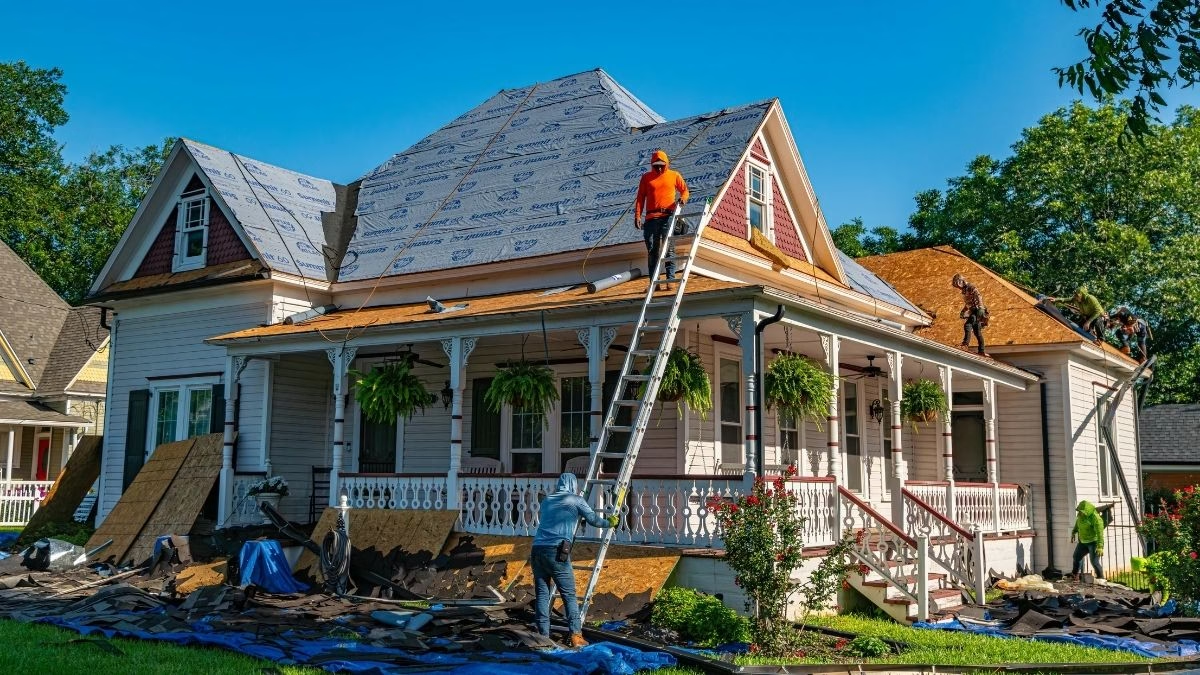
Any roofer worth hiring should be able to point you to completed jobs in your area. References from North Texas neighbourhoods carry extra weight because they confirm that the contractor understands local conditions — the way heat and humidity affect materials, the specific hail patterns that hit communities in Denton and Collin Counties, and the HOA requirements that govern many neighbourhoods in Little Elm, McKinney, and Southlake.
When you contact references, go beyond simply asking whether they were satisfied. Find out how the contractor handled problems. No roofing job is entirely without hiccups — what separates great contractors from mediocre ones is how they respond when something goes wrong. Ask if the crew cleaned up daily, whether the timeline matched the original estimate, and whether they would hire the company again.
Online reviews on Google, the Better Business Bureau, and Nextdoor can also give you a wider picture, but nothing replaces a direct conversation with a real neighbour.
Question 3: What Roofing Materials Do You Recommend, and Why?
A knowledgeable roofer does not recommend the same material for every home. The right choice depends on your roof pitch, your budget, your HOA guidelines, and the specific weather risks in your part of North Texas. A Fort Worth home exposed to frequent high winds has different needs from a Frisco home in a neighbourhood prone to large hail.
Common residential roofing materials in North Texas include:
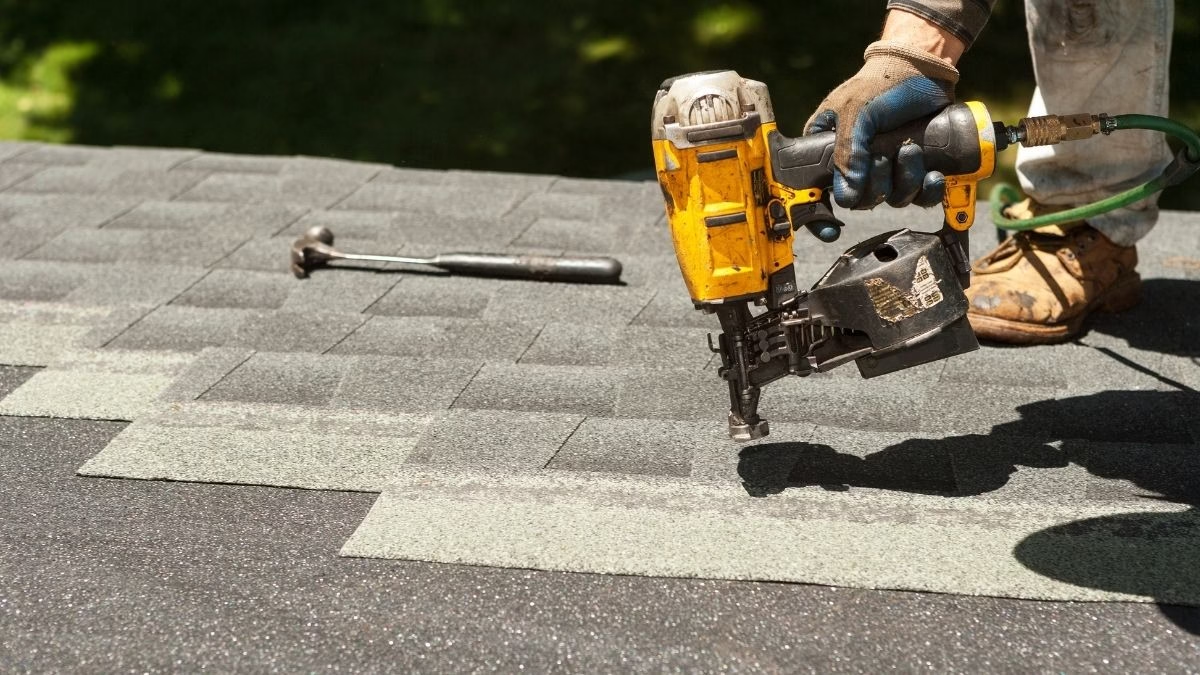
• Architectural asphalt shingles — the most popular choice for their combination of durability, cost-effectiveness, and curb appeal. Impact-resistant versions earn discounts from many Texas insurance carriers.
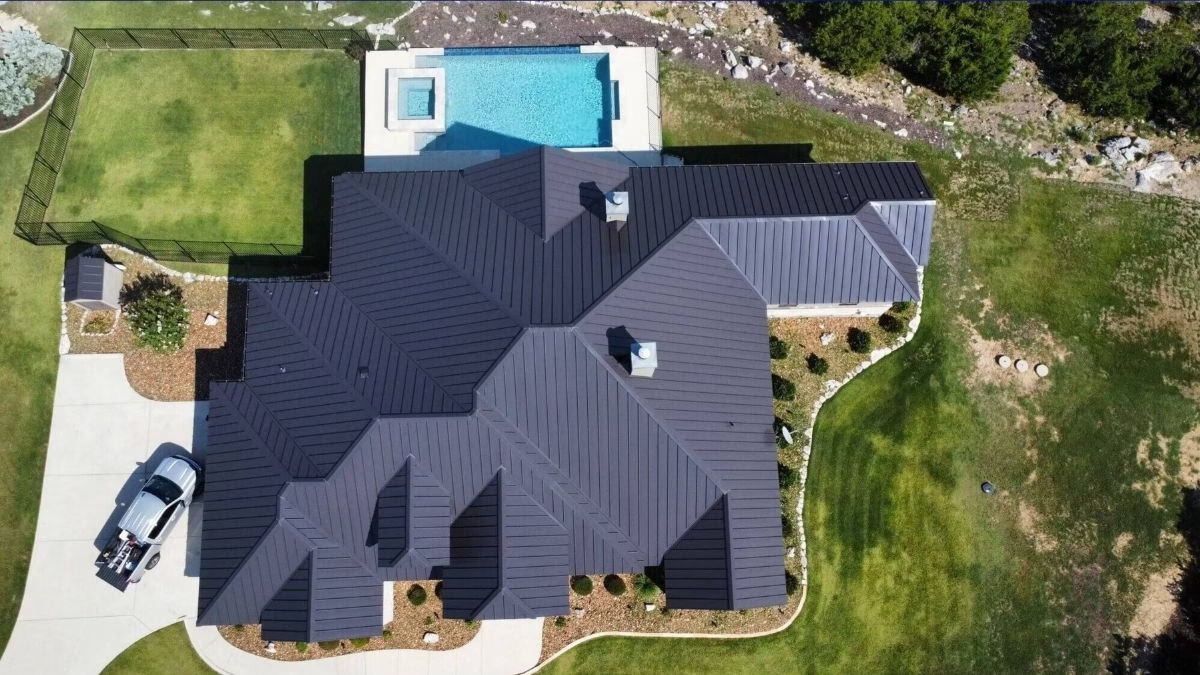
• Metal roofing — increasingly popular in North Texas for its longevity (40–70 years), energy efficiency, and superior hail resistance.
• Cedar shake — a classic look for custom homes in areas like Southlake, though it requires more maintenance in Texas’ humidity.
• Tile roofing—long lasting and beautiful, common in higher-end homes and Spanish-style architecture throughout the DFW metro.
• TPO and other flat/low-slope systems widely used in commercial applications and additions.
A contractor who gives you a thorough, honest comparison of these options, including trade-offs, is demonstrating the kind of expertise you want on your project.
Question 4: What Does Your Written Estimate Include?
Verbal agreements have no place in a roofing project. Every detail should be documented in writing before a single shingle is removed. A thorough written estimate should include the specific materials to be used (brand, product line, colour, and warranty grade), the scope of work (tear-off, decking inspection and repair, underlayment, flashing, ridge cap, and final cleanup), the project timeline, payment schedule, and what happens if additional damage is discovered once work begins.
Beware of vague estimates, or those that say “replace roof” without specifying materials or procedures. These leave room for shortcuts that compromise the finished product. If a contractor is unwilling to be specific in writing, that is a red flag worth taking seriously.
In communities like McKinney and Little Elm, where many homes were built in similar tract developments, unexpected issues such as inadequate ventilation or rotted decking are not uncommon. Make sure the estimate explains how such discoveries will be handled — ideally with a clear per-board or per-sheet rate for additional decking repair rather than an open-ended surprise.
Question 5: Who Will Actually Be on My Roof?
This question catches more homeowners off guard than almost any other. Many roofing companies — including some well-advertised ones — function primarily as sales organizations. They win your contract, then subcontract the actual installation to crews they may not have worked with before. This is not always problematic, but it can be when the subcontractor’s quality standards, insurance coverage, or communication are not closely managed.
Ask directly: “Will your own employees be doing the installation, or will you be using subcontractors?” If subcontractors are involved, ask how long the company has worked with those crews and whether they are covered under the company’s insurance policy. A contractor who is transparent about this and who can speak confidently about the quality of the crews doing the work is operating honestly.
Question 6: What Warranties Come With This Job?
There are two distinct types of roofing warranty, and both matter. The first is the manufacturer’s warranty on the materials themselves the shingles, underlayment, and other products. Premium shingles from manufacturers like GAF, Owens Corning, or CertainTeed carry warranties ranging from 25 years to lifetime coverage, but the terms vary considerably. Some cover only material defects; others cover wind and hail damage or algae staining.
The second is the workmanship warranty a guarantee from the contractor themselves that covers installation errors. This is where your contractor’s quality really shows. A workmanship warranty of one or two years is standard; anything less should prompt follow-up questions. Some high-quality contractors who are certified installers for major manufacturers can offer enhanced warranties that cover both materials and labour under a single extended term.
Get both warranties in writing. Understand what voids them and make sure the installation process you agreed to in the estimate actually meets the requirements to activate the manufacturer’s warranty. Cutting corners during installation can quietly invalidate coverage you thought you had.
Question 7: Can You Help With My Insurance Claim?
If your roof damage is the result of a storm, which is an everyday reality for homeowners in Frisco, Fort Worth, and across North Texas, your roofing contractor’s ability to work alongside your insurance company is enormously valuable. An experienced contractor understands how adjusters evaluate claims, what documentation is needed to support full replacement coverage, and how to communicate effectively on your behalf.
Ask the contractor if they have experience working with homeowner’s insurance claims and what their process looks like. A reputable company will offer to be present during the adjuster’s inspection, help you document damage thoroughly, and review the adjuster’s report with you to make sure nothing is overlooked.
One necessary caution: be wary of any contractor who asks you to sign an Assignment of Benefits (AOB) before the adjuster’s visit. This transfers your insurance rights to the contractor and can create legal complications you do not want. A trustworthy contractor supports your claim without requiring you to hand over control of it.
Question 8: What Is Your Payment Schedule?
How a contractor structures payment tells you a great deal about how they manage their business. A reasonable payment schedule might include a modest deposit at contract signing, a payment upon delivery of materials, and a final payment upon satisfactory completion of the work. What you should never do is pay in full before any work begins.
Storm-chasing contractors often demand large upfront payments — sometimes the full project cost before lifting a tool. Once they have the money, motivation to deliver quality work, or sometimes any work at all, drops dramatically. In North Texas, where spring and summer storms can bring dozens of contractors into a neighbourhood overnight, this scam is unfortunately not rare.
If you are working through an insurance claim, payments typically flow through the insurance process on a structured schedule. Make sure the contractor is familiar with how this works and aligns their payment expectations accordingly.
Question 9: How Will You Protect My Property During the Job?
Roofing is inherently messy, but a professional crew takes deliberate steps to protect your landscaping, gutters, siding, and windows during the process. Ask specifically what measures the crew takes to protect plants and shrubs, how debris will be managed throughout the day, and what equipment they use to prevent material from falling directly onto fragile surfaces.
Ask also about cleanup. Will the crew perform a magnet sweep for nails at the end of each day? How will old materials be disposed of and is there a dumpster involved, or will debris sit in your driveway over a weekend? In neighbourhoods across Southlake, McKinney, and Frisco, where HOAs closely monitor property appearance, these details matter on both practical and cosmetic levels.
Question 10: What Is Your Timeline, and What Could Delay It?
Roofing timelines are genuinely weather-dependent, but a good contractor will give you a clear projected schedule and communicate honestly about what could affect it. Most residential roof replacements in North Texas can be completed in one to three days under good conditions. If a contractor is vague about timing or tells you they will start “when they can get to it” without any specific commitment, that reflects poorly on how they manage their workload.
Ask what the contractor’s current backlog looks like, whether your project is being fit around others, and who your point of contact will be if you have questions during the project. After major hail events, which hit North Texas communities like Little Elm and Fort Worth multiple times each year, wait times can extend significantly. A contractor who sets honest expectations is more trustworthy than one who promises an impossibly quick start to win your business.
Bonus: Questions Specific to North Texas Conditions
North Texas presents unique challenges that homeowners elsewhere do not face to the same degree. A few additional questions worth asking in this region:
Do you recommend impact-resistant shingles?
Class 4 impact-resistant shingles are particularly relevant for homeowners in hail-prone areas of the DFW Metroplex. Many insurance companies in Texas offer premium discounts of 20–30% for homes with qualified impact-resistant roofing, which can substantially offset the additional upfront cost over time. A contractor with deep local experience will bring this up proactively if they do not, ask them about it.
How will you handle attic ventilation?
Proper attic ventilation is critical in North Texas summers. Poor ventilation traps extreme heat in the attic, shortening shingle life, increasing energy costs, and stressing your HVAC system. A thorough roofer will inspect your current ventilation as part of the job and recommend upgrades if needed. Ridge vents, soffit vents, and powered ventilators all play a role and the balance between intake and exhaust ventilation matters. If this topic never comes up in your conversation with a contractor, consider it a gap.
Are you familiar with my HOA’s requirements?
Many communities in Frisco, Southlake, Little Elm, and McKinney are governed by homeowners’ associations with specific rules about roofing materials, colours, and permitted products. A contractor who has worked extensively in North Texas neighbourhoods will be familiar with how to obtain HOA approval and what products are typically accepted. If you need to submit an application to your HOA before work can begin, your contractor should support that process.
Red Flags to Watch For in Any Contractor Conversation
Even when a contractor seems professional at first glance, certain behaviours during the sales process should give you pause. Look out for the following warning signs:
• Pressure to sign immediately or claims that a special price is available “today only,” legitimate contractors do not need to create artificial urgency.
• No physical business address or local office a P.O. box or no address at all is familiar with storm-chasing operations that move from city to city.
• Unwillingness to provide written references or proof of insurance.
• Requests for cash payment or large deposits before work begins.
• Vague or incomplete written estimates that lack material specifications.
• Offers to “waive your deductible” this is insurance fraud in Texas, regardless of how it is presented to you.
• No mention of permits depending on the scope of work and your municipality, permits may be required, and pulling them is the contractor’s responsibility.
Why North Texas Homeowners Trust Lee Construction
At Lee Construction, we believe every homeowner deserves straightforward answers, honest pricing, and work they can count on for years to come. We are locally rooted in North Texas, which means we understand the climate, the communities, and the specific demands that DFW weather places on residential roofs.
Our team brings experience across the full range of residential roofing services in Frisco, Little Elm, Southlake, McKinney, and Fort Worth. Whether you need a simple repair after a storm, a complete roof replacement, a new installation on a custom build, or expert guidance through an insurance claim, we approach every job with the same commitment to quality and transparency.
We are fully insured, provide written estimates with complete material specifications, offer both manufacturer and workmanship warranties, and stand behind everything we do. We are not storm chasers we are your neighbours, and we will be here long after your new roof is in place.
Final Thoughts: Hire Slowly, Enjoy Your Roof for Decades
Choosing a roofer is one of the most consequential home improvement decisions you will make. Done right, a quality roof adds value to your home, keeps your family safe, and delivers peace of mind through every North Texas storm season. Done wrong, it leads to leaks, mould, structural damage, and the frustration of having to redo work you already paid for.
Take the time to ask every question on this list. A contractor who answers each question clearly, calmly, and in writing has earned your trust. One who deflects, rushes you, or cannot produce documentation has told you something important and you should listen.
If you are ready to speak with a roofing team that has nothing to hide and everything to prove, Lee Construction is prepared to earn your business. Contact us today for a free inspection and estimate no pressure, no gimmicks, just honest work from people who care about your home as much as you do.