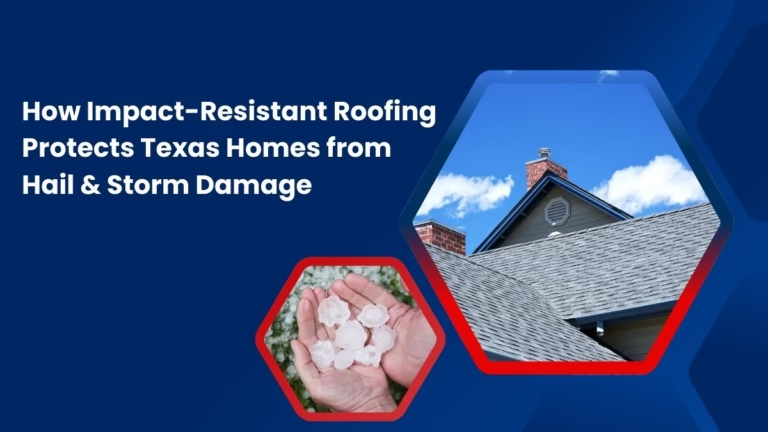
Storms and hail can do more damage to your roof than anything else. Remember, your roof is your first line of defense. It protects you and your family in your home, letting you live with peace of mind.
Storms sweep up with little to no warning. Hails cause way more damage and inconvenience than you can imagine. You cannot live in a home where sunlight is visible and rain is leaking onto your sofa. That’s why you need roof wind damage repair services in North Texas.
Here, we will discuss the significant signs of roof damage and the key factors that lead to roof replacement.
Signs of Wind and Hail Damage
- Missing Shingles
Do you have asphalt shingles or tiles on your roof? You are likely to come across missing or damaged shingles or tiles after a storm. You may notice while strolling in your garden or having your daily evening tea from a distance.
The asphalt shingles or tiles are the outer layer of your roof. They protect the underlying layers of your roof and your home’s interior structure. A missing shingle, in reality, is creating a pathway for water to enter your home. A few weeks or months later, you may come across yellow spots or stains on your walls and ceilings. It is clearly a sign of mold and mildew growth.
- Bald Spots on Your Shingles
Shingles are mainly small and protective granules on your roof. They help in shedding water off your roof. If one of them goes missing, the shingles won’t perform correctly. You may notice bald spots on your roof’s structure. It is very common in older roof systems or in those exposed to recent storms.
Signs include finding shingle granules in your gutters near your downspouts, or in your yard under your roofline.
- Loose Debris on Your Roof and Homes
After a storm, you may notice loose debris on your roof or around your home. It is a sign of significant roof damage. You can contact Lee Construction for manual and drone roof inspection services. We evaluate your visible and hidden roof damage and provide effective solutions.
- Hail-Related Damage
Right after hail hits your roof, your roofing materials are more likely to be affected. For instance, tile roofs are more affected than shingles. They are going to crack or break, compromising the home’s underlying structure.
How Does Different Hail Size Affect Your Roof?
- Pea-Sized Hail
They are ¼ inch in diameter, smaller than the regular ones. If your roof is already in poor condition, it will affect its structure. As a result, you may experience roof leaks and other issues.
- Penny-Sized Hail
These hailstorms are between ⅞ and an inch in diameter.
- Quarter-Sized Hail
These hailstones are between 1 and ¼ inches in diameter.
- Golf Ball-Sized Hail
The golf ball-sized hailstones are 1 and ¾ inches in diameter. Once they touch your roof’s surface, it will result in severe dents, cracks, and holes in shingles.
- Tennis Ball-Sized Hail
Tennis ball-sized hailstorms are around 2 and ½ inches in diameter.
- Baseball-Sized Hail
Baseball-sized hailstorms are 2 and ¾ inches in diameter.
- Softball-Sized Hail
Softball-sized hailstorms are 4 inches or more in diameter.
No matter the hail size, it still affects your roof and its functions. You will soon notice water-related roof damage and leaks in your structure—for instance, significant cracks, dents, and holes. Thus, you need professionals for roof hail damage repair in North Texas.
- Clogged or Broken Gutters and Downspouts
Sometimes, after a storm, roof damage increases significantly. You may find shingle debris around your gutters. Moreover, some storms are so intense that they contain wind and hail that can affect your roof’s structure. As a result, the gutters are not able to take off water directly away from your home’s structure through the downspouts.
- Ice Dams on Your Roof
Ice dams occur when the melting snow refreezes on the roof’s surface. It is more common on poorly maintained roofs. One of the most significant signs of ice dams is the presence of icicles. You will notice them as a large, icy patch on your roof from the ground.
Ice dams are a serious problem for your roof. They will melt, causing the surface to contract. Then they will expand once again when the temperature rises. It will result in nothing but accumulated water under the shingles. If this water expands beneath your shingles, it will force them out of position. The worst that can happen is that the ice will ultimately melt. It will expose your roofing material that your outer shingle layer was protecting.
- Damage to Supports or Accents
Apart from roofs, you will also find damage in their supporting structures. Check out the flashing that seals out water around protrusions on your roof, such as skylights or chimneys. See if they are in good shape. Notice any saggy areas in your roofs and damage around your flashings and accents. If you find so, it is a sure sign that you need roof damage repair services in North Texas.
Remember that water problems never get better with time. It will only get worse when you keep neglecting your roof. Be prepared for expensive roof repair services.
- Moisture in Your Attic
Most homeowners miss this sign until a bigger problem catches their eye. After any storm, check your attic for any signs of damage. If you notice any signs of dampness, there is a high chance that water is getting into your home.
You should check for wet spots on wood, frost, or mold while you are inside the attic. Each of these signs indicates water intrusion on your property.
Thus, in both, you need hail and storm damage roof repair services in North Texas. However, it depends on your roof’s overall condition.
Factors that Determine Roof Repair vs. Replacement
- Age and Condition of Your Existing Roof
The age of your roof determines whether you need roof repair or replacement services. It will help the local roofers to understand what works as a long-term solution. For instance, new roofs will benefit from hail and storm repair damage in North Texas. The older roofs, on the other hand, may need replacement and future maintenance.
- Extent and Distribution of Damage
The size of the hail matters; upon contact with your roof surface, it determines the extent of the roof’s structural damage. For instance, minor roof damage can be repaired with hail damage repair in North Texas. In the event of widespread roof damage, you will need to replace the roof as the cost-effective long-term solution.
- Cost-Effective Analysis for Long-Term Value
The cost-effectiveness of any roof wind repair damage in North Texas depends on your roof’s condition. For example, you cannot choose continuous roof repair services one after another. It will only result in high costs equal to roof replacement.
- Understanding the Insurance Claims for Your Roofs
Most homeowners in North Texas will get specific insurance coverage for roof hail damage. You need to understand the overall insurance process to make it easier to file your insurance claims. As a responsible homeowner, inform your insurance company immediately or within 30 days of any roof damage after a storm or hail. It makes your insurance process claims easier and safer. Click photos and videos of your roof showing signs of its damage. Make sure to schedule your insurance adjuster’s visits with your insurance contractors. The latter knows how to identify the invisible signs of roof damage to strengthen your claim for a roof replacement.
Final Thoughts
Finally, it depends on your roof’s condition whether you need repair or replacement services in North Texas. In general, roof inspections make it easier to identify core roof damage. The aging roof, missing shingles, blocked gutters, mold and mildew growth, and poor attic ventilation indicate the need for a roof replacement. The cause can be both wind and hail storm damage to your home.
You can call Lee Construction now for roof wind damage repair services in North Texas. We are trustworthy and reliable, with over 16 years of hands-on experience in a wide range of roofing services.